Drawing: Lines of Identity
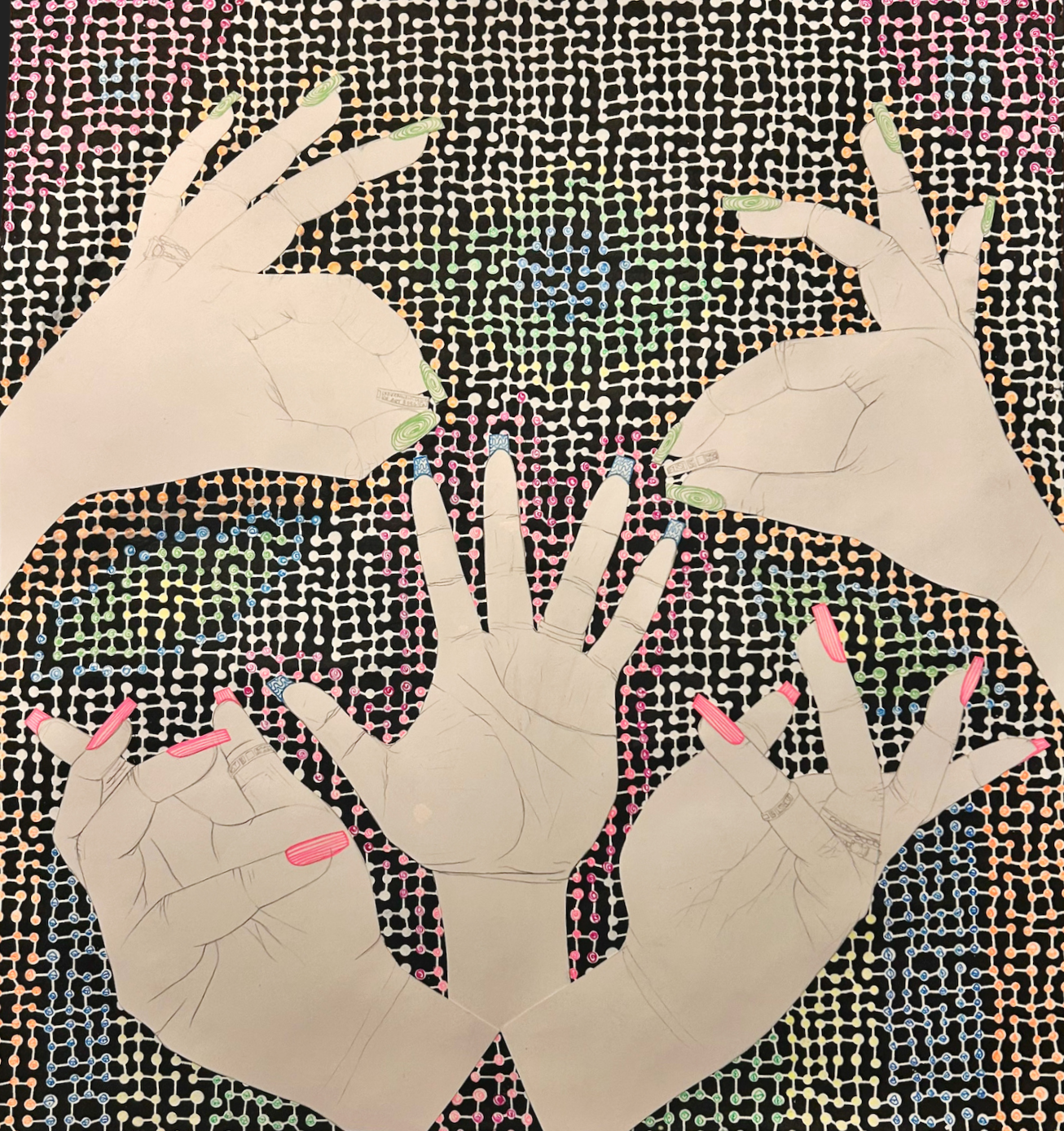
In this lesson, students explore identity through contour drawing and repetition. They practice observation skills by drawing their hands using different contour techniques, then develop a composition using repeated imagery. Pattern and design are incorporated to add personal meaning, helping students create a final drawing that reflects both technical skill and individual identity.
Essential Question(s):
How can artists use observation and drawing techniques to better represent what they see?
How can repetition and composition communicate identity and meaning in an artwork?
Curriculum Standard(s):
VA:Cr1.2.8a: Develop criteria for evaluating an artwork or collection of artworks.
VA:Cr2.1.8a: Demonstrate willingness to experiment, innovate, and take risks to pursue ideas through art-making.
VA:Re7.2.8a: Analyze how visual imagery influences understanding of social and cultural ideas.
VA:Cn10.1.8a: Make art that reflects personal interests, beliefs, or experiences
Objectives:
Practice contour drawing techniques
Create a composition using repeated imagery
Use pattern and repetition to show identity
Demonstrate proportion and craftsmanship
Art History: Step-by-Step:
Hook: Quick hand sketches to observe shape and form
Introduction: View examples of contour drawings and repeated hand compositions
Observe: Identify lines, shapes, and repeated imagery
Analyze: Discuss how repetition and composition create balance and unity
Interpret: Explore how hand imagery can represent identity and personal meaning
Practice: Complete blind, modified, and contour drawing exercises
Plan: Sketch multiple composition ideas using repetition
Create: Develop final drawing with repeated hands and added patterns
Closure: Write a short reflection explaining how the artwork represents identity