Sculpture: Forming Identity
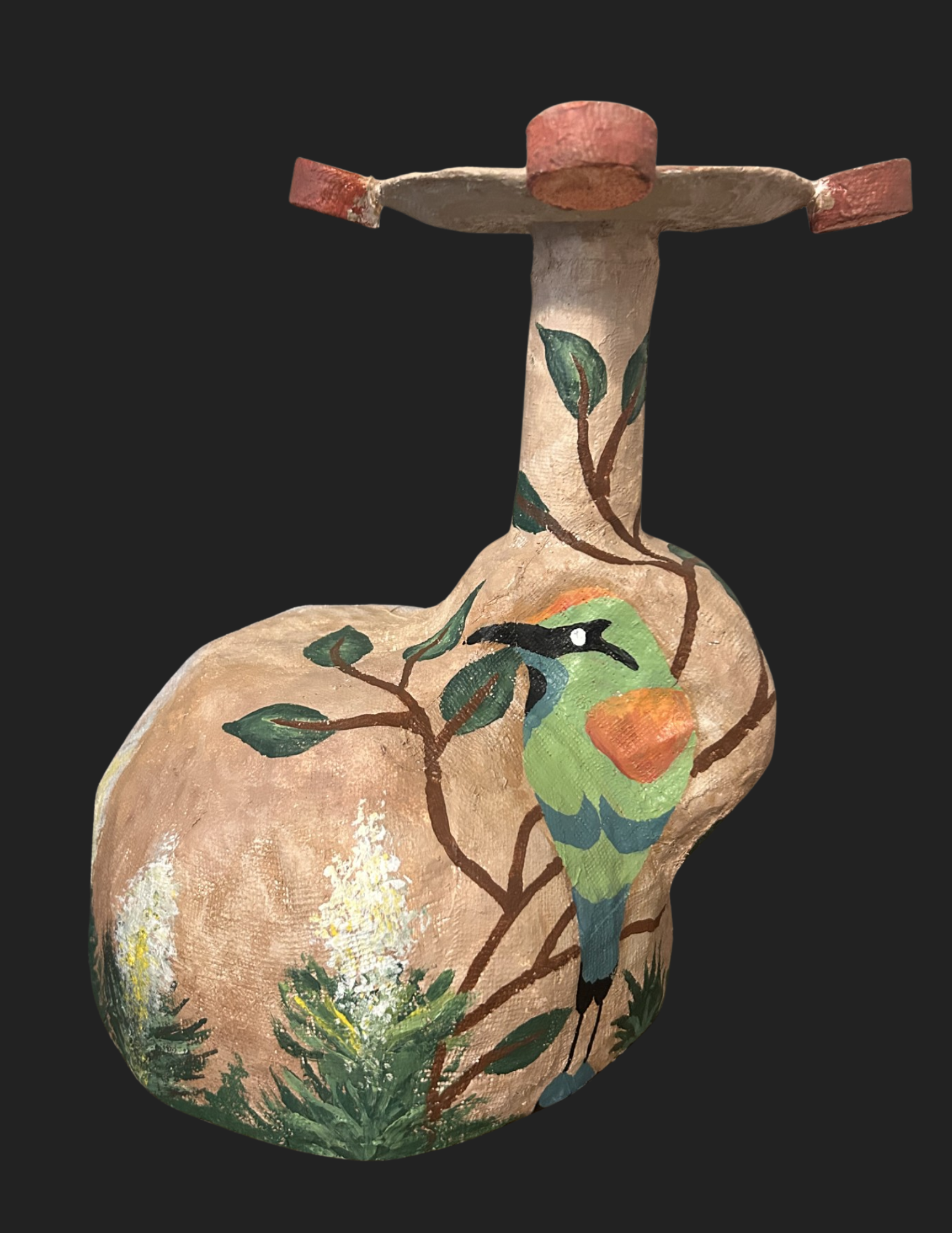
Students create a three-dimensional sculpture that combines architectural forms and symbolic imagery to represent identity and community. Through building, layering, and surface design, students explore form, structure, and texture. The final piece reflects personal meaning while demonstrating craftsmanship and creative problem-solving in a mixed media format.
Essential Question(s):
How can artists transform broken spaces into meaningful works that represent identity and community?
Curriculum Standard(s):
VA:Cr1.2.8a: Develop criteria for evaluating an artwork or collection of artworks.
VA:Cr2.1.8a: Demonstrate willingness to experiment, innovate, and take risks to pursue ideas through art making.
VA:Re7.2.8a: Analyze how visual imagery influences understanding of social and cultural ideas.
VA:Cn10.1.8a: Make art that reflects personal interests, beliefs, or experiences.
Objectives:
Design a 3D form based on identity
Build a stable structure
Use texture and surface to add meaning
Apply symbolism in sculpture
Art History: Step-by-Step:
Hook: Sketch an object, place, or symbol that represents your identity
Introduction: View examples of sculptures, architecture, and mixed media artworks
Observe: Identify form, structure, texture, and materials
Analyze: Discuss how form and materials create meaning and stability
Interpret: Explore how sculptures can represent identity and community
Practice: Experiment with building form, structure, and surface techniques
Plan: Sketch multiple sculpture ideas based on identity
Create: Build and refine a 3D sculpture using mixed materials
Closure: Write a short reflection explaining how the sculpture represents identity